


Is It Safe to Use Curling Irons or Straighteners on Keratin-Treated Hair?
KERATIN TREATMENT on 13th Aug 2026
Is It Safe to Use Curling Irons or Straighteners on Keratin-Treated Hair?
Yes, you can generally use a curling iron or straightener on keratin-treated hair once your treatment's required setting period has passed. The important part is using moderate heat, applying a heat protectant, and following the specific instructions for the keratin formula you received.
A keratin treatment does not mean you have to give up curls, waves, or occasional flat-ironing. In fact, keratin-treated hair is often easier to style because frizz is reduced and the hair feels smoother. However, excessive heat can still dry or damage the hair and may compromise how good your results look over time.
Below, we'll explain when you can start heat styling, the best temperature to use, whether keratin-treated hair will still hold curls, and the everyday mistakes that can shorten the life of your treatment.
Quick Answer: Can You Heat-Style Keratin-Treated Hair?
Yes. After the initial setting period specified for your particular treatment, keratin-treated hair can usually be curled, straightened, blow-dried, and styled with heat.
For best results:
- Follow the waiting period specified by your stylist or product manufacturer.
- Always apply heat protectant before using hot tools.
- Use the lowest effective temperature for your hair type.
- Avoid repeatedly passing a flat iron over the same section.
- Keep the hair properly conditioned.
- Use aftercare products designed for keratin-treated hair.
The objective is not to eliminate heat styling completely. It is to avoid unnecessary heat exposure that can dry the hair and reduce the benefits you wanted from your keratin service in the first place.
Can I Use a Curling Iron on Keratin-Treated Hair?
Yes, you can curl keratin-treated hair. Once any post-treatment waiting period is complete, a curling iron or curling wand can be used to create waves, loose curls, or more defined styles.
Keratin treatments reduce frizz and smooth the hair, but they do not normally prevent you from temporarily changing your hairstyle with a hot tool.
Follow these rules when curling:
- Apply heat protectant first.
- Make sure your hair is completely dry.
- Start with a lower temperature and increase only if necessary.
- Don't hold the curling iron on one section longer than necessary.
- Avoid curling your hair with extreme heat every day.
How Long After a Keratin Treatment Can I Curl My Hair?
This depends on the exact keratin formula.
Traditional keratin treatments may require a setting period during which the hair should remain dry, loose, and relatively undisturbed. Other modern or express treatments may allow washing and styling much sooner.
Do not assume every keratin treatment requires exactly 72 hours. Follow the manufacturer's instructions and the advice provided by your stylist for the specific treatment applied to your hair.
Can I Use a Straightener on Keratin-Treated Hair?
Yes. A flat iron can be used on keratin-treated hair after the treatment's required setting period.
However, many people discover they need their straightener much less frequently after keratin because the treatment already reduces frizz and makes blow-drying easier.
If you do use a straightener:
- Apply a heat protectant.
- Use it only on completely dry hair.
- Choose the lowest temperature that straightens your hair effectively.
- Use slow, controlled passes instead of repeatedly ironing the same section.
- Avoid daily high-temperature straightening whenever possible.
What Temperature Should You Use on Keratin-Treated Hair?
There is no single perfect temperature for everyone. Fine, bleached, damaged, or chemically processed hair generally requires less heat than thick, coarse, healthy hair.
| Hair Condition | Heat-Styling Approach |
|---|---|
| Fine or fragile | Use low heat and increase only if necessary |
| Bleached or chemically processed | Keep heat conservative and minimize repeated passes |
| Normal or medium texture | Use moderate heat with heat protection |
| Thick or coarse | May require more heat, but use only what is necessary |
More heat does not mean better keratin results. Once the salon treatment has been completed, your daily styling tools should be used for styling rather than attempting to "reseal" the keratin yourself.
Will Hair Still Hold a Curl After a Keratin Treatment?
Yes, keratin-treated hair can still hold curls. However, the curl may behave differently because keratin treatments reduce frizz and can relax some of the hair's natural texture.
You may notice:
- Smoother, more polished curls.
- Less frizz around each curl.
- Looser curls depending on the strength of your keratin treatment.
- Fine hair may need lightweight styling products for additional hold.
- Hair may require less heat to create a polished finish.
If keeping significant curl and volume is important to you, discuss this before your keratin treatment. A stylist may be able to select a smoothing approach that prioritizes frizz reduction rather than maximum straightness.
Does Heat Ruin a Keratin Treatment?
Occasional, properly controlled heat styling does not automatically ruin a keratin treatment. After all, heat is commonly part of the professional keratin application process itself.
The concern is repeated excessive heat.
Using extremely hot styling tools every day can contribute to:
- Dryness.
- Breakage.
- Split ends.
- Dullness.
- Loss of softness.
That is why a good keratin aftercare routine combines gentle cleansing, conditioning, heat protection, and sensible styling temperatures.
What Can Ruin a Keratin Treatment?
A single curling session is unlikely to be the biggest threat to your results. Your everyday hair-care routine matters much more.
Common habits that may shorten keratin results include:
- Washing your hair before the required waiting period is complete.
- Using incompatible or harsh cleansing shampoos.
- Overwashing the hair.
- Frequent exposure to chlorinated swimming pools.
- Repeated exposure to salt water without proper protection and aftercare.
- Excessive high-temperature styling.
- Failing to condition dry or chemically processed hair.
- Ignoring the specific instructions supplied with your keratin treatment.
What Should You Not Do With Keratin-Treated Hair?
If you want your results to last as long as possible, avoid treating your newly smoothed hair exactly as you did before the service.
- Don't wash during the treatment's specified no-wash period.
- Don't use harsh clarifying shampoos routinely.
- Don't use excessively hot tools without heat protection.
- Don't flat-iron wet or damp hair.
- Don't expose the hair repeatedly to chlorine without protection.
- Don't assume aftercare instructions are identical for every keratin formula.
Do You Really Need to Wait 3 Days to Wash Hair After Keratin?
Not necessarily. The familiar "wait 72 hours" rule applies to some keratin treatments, but it is not universal.
Traditional formulas may require you to wait approximately 48 to 72 hours before washing, tying, clipping, or heavily manipulating your hair. Other modern keratin treatments are formulated differently and may allow same-day or next-day washing.
The safest rule is simple: follow the instructions for the exact keratin product used on your hair.
If your stylist tells you to wait three days, wait three days. If the manufacturer's protocol specifically permits earlier washing, an arbitrary 72-hour wait may not be necessary.
How to Heat-Style Keratin-Treated Hair Safely
Step 1: Make Sure Your Hair Is Dry
Never run a traditional flat iron over wet hair unless you are using a tool specifically designed and instructed for that purpose. For conventional hot-tool styling, dry the hair thoroughly first.
Step 2: Apply Heat Protectant
A lightweight heat protectant provides an additional barrier between your hair and high temperatures.
Step 3: Start With Lower Heat
Use the lowest temperature that gives you the result you want. You can increase it gradually if your hair needs more heat.
Step 4: Limit Repeated Passes
Going over the same strand repeatedly exposes the hair to unnecessary heat.
Step 5: Finish With Lightweight Hair Care
Use a small amount of serum or leave-in product when needed. Avoid saturating the hair with heavy products that can make freshly smoothed hair look flat.
Best Aftercare Products for Heat-Styled Keratin Hair
The products you use between styling sessions can make a significant difference in how your hair looks and how long your smoothing results remain noticeable.
A complete routine should include:
- A gentle shampoo suitable for keratin-treated hair.
- A moisturizing conditioner.
- A weekly nourishing hair mask.
- A lightweight leave-in treatment.
- A heat-protection product before blow-drying, curling, or straightening.
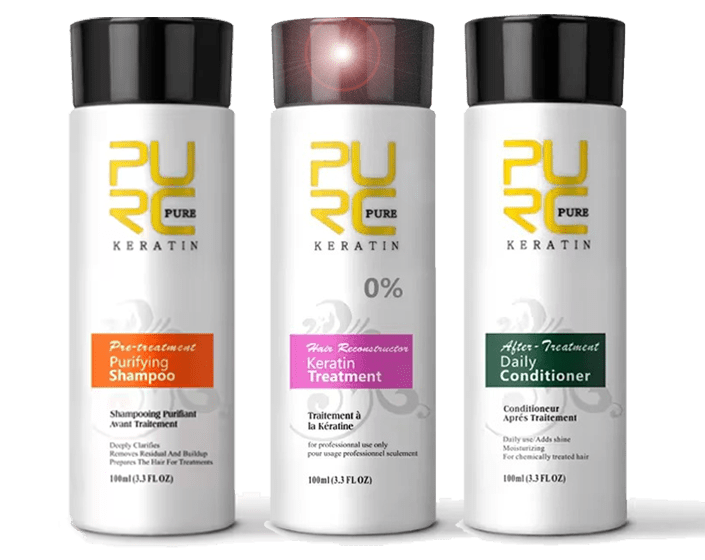
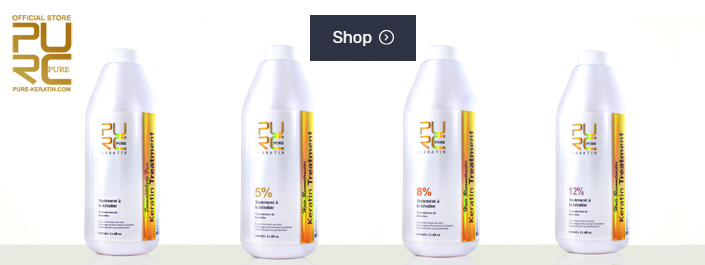
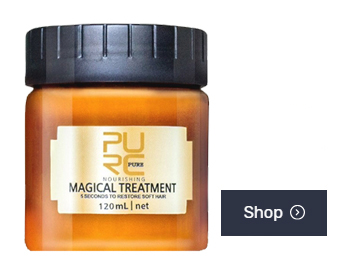
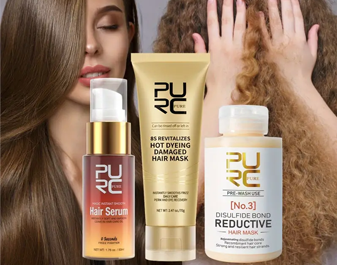
Pure-Keratin.com offers professional keratin treatments alongside shampoos, conditioners, masks, serums, and maintenance products for building a complete keratin aftercare routine.
Browse the Pure Keratin hair-care collection to select products suited to your treatment and hair type.
How to Make Your Keratin Treatment Last Longer
If you regularly curl or straighten your hair, a few habits can help you get more from your treatment:
- Follow the exact initial waiting period for your formula.
- Wash only as often as your hair and scalp need.
- Use keratin-compatible aftercare.
- Condition consistently.
- Use heat protection every time you style with hot tools.
- Reduce unnecessary high-temperature styling.
- Protect your hair around chlorine and salt water.
- Use a nourishing mask when your hair feels dry.
Why Choose Pure Keratin for Treatment and Aftercare?
A keratin treatment shouldn't end when you leave the salon. Consistent maintenance is what helps preserve the smooth, shiny, manageable finish you paid for.
Pure Keratin specializes in professional keratin treatments and complementary hair-care products, making it easier to build a treatment and aftercare routine in one place.
Pure Keratin offers:
- More than 200 hair-care products.
- More than 30 years of hair-care experience.
- Professional keratin smoothing systems.
- Keratin-compatible shampoos and conditioners.
- Nourishing masks and maintenance treatments.
- Affordable options for salon professionals and home users.
Visit Pure-Keratin.com to find a keratin treatment and maintenance routine matched to your hair goals.
People Also Ask About Heat Styling After Keratin Treatments
Can I use a curling iron on keratin-treated hair?
- Yes, after your treatment's required setting period.
- Apply heat protectant first.
- Use the lowest effective temperature.
- Avoid excessive daily heat.
Can I use a straightener on keratin-treated hair?
- Yes.
- Make sure your hair is completely dry.
- Use heat protection.
- Avoid repeatedly ironing the same section.
- Follow any initial restrictions supplied with your treatment.
What should you not do with keratin-treated hair?
- Don't wash before the required waiting period ends.
- Don't routinely use harsh clarifying shampoos.
- Don't apply excessive heat without protection.
- Don't flat-iron damp hair with a conventional straightener.
- Don't ignore the aftercare instructions for your specific treatment.
What can ruin a keratin treatment?
- Incorrect washing during the initial setting period.
- Harsh or incompatible shampoos.
- Frequent high-heat styling.
- Repeated chlorine exposure.
- Poor aftercare.
Will hair still hold a curl after a keratin treatment?
- Yes, most keratin-treated hair can still be curled.
- Curls may look smoother and less frizzy.
- Depending on the treatment, your natural texture may be looser.
- Fine hair may benefit from a lightweight styling product for additional hold.
Do I really need to wait 3 days to wash my hair after keratin?
- Not with every treatment.
- Some traditional formulas require 48 to 72 hours.
- Some modern treatments permit much earlier washing.
- Always follow the instructions for the specific formula used on your hair.
Final Verdict: Can You Curl and Straighten Keratin-Treated Hair?
Yes. You can use curling irons and straighteners on keratin-treated hair once the required post-treatment setting period has passed. Keratin does not lock you into one hairstyle; you can still create curls, waves, sleek straight styles, and blowouts.
The key is moderation. Use a heat protectant, choose the lowest effective temperature, avoid repeated high-heat passes, and maintain your hair with products appropriate for keratin-treated hair.
Most importantly, don't automatically follow generic rules you find online. Different keratin formulas have different washing and styling protocols, so the instructions for your specific treatment should always come first.
For professional keratin treatments and the shampoos, conditioners, masks, and maintenance products needed to protect your results, explore Pure-Keratin.com.